The Ultimate Guide to Holistic Living: A Blueprint for a More Connected and Vibrant Life

What is Holistic Living, Really? Beyond the Buzzword
In a world that constantly pushes us toward specialization, quick fixes, and fragmented solutions, a quiet revolution is taking place. It’s a return to an ancient wisdom, a gentle rebellion against the idea that we are simply a collection of disconnected parts. This revolution has a name: Holistic Living.
You’ve likely heard the term. It’s often associated with yoga retreats, organic foods, and mindfulness apps. And while those things can certainly be part of a holistic lifestyle, they are merely tools—the branches of a tree whose roots run far deeper.
At its core, holistic living is a philosophy and a practice of seeing life as an interconnected whole. It recognizes that you are not just a body that needs exercise, a mind that needs to think, or a spirit that needs occasional tending. You are a complex, dynamic, and integrated system where every single aspect of your being influences every other aspect.
To live holistically is to understand that your gut health can directly impact your mood and anxiety levels. It’s knowing that a lack of purpose or community can manifest as physical fatigue or illness. It’s recognizing that the quality of your sleep can determine the clarity of your thoughts the next day, and that the stress from your job can sabotage your best efforts to eat well.
It is, quite simply, the art and science of caring for the whole you. This guide is your blueprint for that journey.
The Flaw in the Fragmented Approach: Why Treating Symptoms Isn’t Enough
Our modern society, particularly our healthcare system, excels at a fragmented, reductionist approach. If you have a skin problem, you see a dermatologist. For digestive issues, a gastroenterologist. For anxiety, a psychiatrist. Each specialist expertly treats a specific symptom or a single part of the body.
While this specialization is incredible for acute care and emergencies, it often fails us when it comes to creating genuine, lasting well-being. It’s like trying to fix a struggling plant by only painting one of its leaves green. You might mask the problem temporarily, but you haven’t addressed the health of the soil, the amount of sunlight, or the quality of the water. You haven’t looked at the whole system.
Treating symptoms without understanding their root cause is a recipe for frustration. It’s why you might:
Follow a perfect diet but still feel exhausted because your stress levels are unmanaged.
Exercise diligently but see no results because your sleep is consistently poor.
Meditate every morning but feel anxious all day because your diet is causing inflammation.
Holistic living invites us to take a step back and look at the whole picture. It asks a more powerful question: not just “How do I fix this symptom?”, but “What imbalance in my overall system is causing this symptom to appear?” This shift in perspective is the first, and most crucial, step toward profound and sustainable health.
The Principle of Interconnection: How Your Thoughts Can Change Your Gut Health
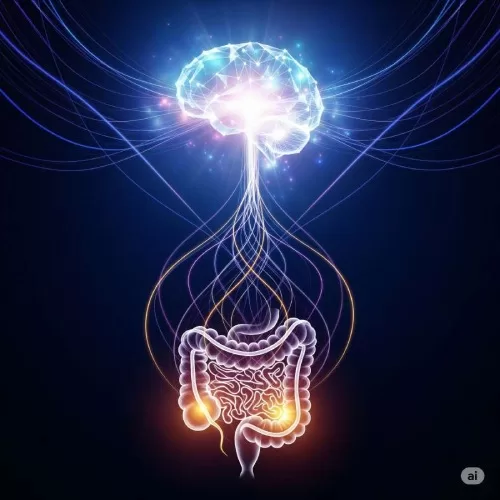
The foundational principle of holism is interconnection. Nothing exists in a vacuum. To truly grasp this, let’s look at one of the most well-researched examples in modern science: the gut-brain axis.
For centuries, we thought of the brain as the body’s undisputed command center, sending one-way signals down to a passive digestive system. We now know this is completely wrong. Your gut is lined with an intricate network of neurons—so many, in fact, that it’s often called our “second brain.”
This gut-brain axis is a constant, two-way superhighway of information.
The Gut Talks to the Brain: A staggering 90% of the body’s serotonin, a key neurotransmitter for mood regulation, is produced in the gut by your gut bacteria. An unhealthy, inflamed gut can therefore directly contribute to feelings of depression and anxiety.
The Brain Talks to the Gut: Have you ever felt “butterflies in your stomach” when you were nervous? That’s your brain talking to your gut. Chronic stress floods your body with the hormone cortisol, which can damage your gut lining, alter your gut bacteria, and impair digestion.
This single example reveals the beautiful and undeniable truth of the holistic model. Your mental state affects your physical digestion. Your physical digestion affects your mental state. They are two sides of the same coin. This principle of interconnection applies to every system in your body. Your sleep, your relationships, your environment, your sense of purpose—it all weaves together to create the tapestry of your health.
Your Roadmap to a Vibrant Life: What This Ultimate Guide Covers
This guide is designed to be your comprehensive manual for building a holistic life from the ground up. We will move beyond theory and dive deep into the practical application of these principles across the four key pillars of your being.
Part 2: The Pillar of the Body: We will explore holistic approaches to nutrition, movement, sleep, and your physical environment.
Part 3: The Pillar of the Mind: We will delve into practices for cultivating mental clarity and emotional resilience, from mindfulness to nervous system regulation.
Part 4: The Pillar of the Spirit: We will journey into the often-neglected realms of purpose, connection, gratitude, and play.
Part 5: Integration: We will bring it all together, showing you how to weave these practices into the fabric of your real, busy life.
This is not a list of rules to follow. It is an invitation. An invitation to stop seeing yourself as a project to be fixed, and to start seeing yourself as a whole being to be nourished. Your journey to a more connected, vibrant, and purposeful life begins now.
The Pillar of the Body: Nurturing Your Physical Vessel
Your body is the physical home in which you experience your entire life. It is not a machine to be commanded or an enemy to be conquered; it is a wise, living ecosystem that is constantly communicating with you. Nurturing this physical vessel is the foundational practice of holistic living. It is the soil from which mental clarity, emotional resilience, and spiritual connection can grow.
In this section, we will move beyond the superficial and explore four critical domains of physical well-being: Holistic Nutrition, Mindful Movement, Restorative Sleep, and a supportive Physical Environment. We will treat each not as a separate chore, but as an interconnected opportunity to provide your body with the safety, energy, and resources it needs to thrive.
Holistic Nutrition: Food as Information, Energy, and Medicine
At the most basic level, food is fuel. But in a holistic context, it is so much more. Every bite you take is a packet of information that tells your genes what to do, your hormones how to behave, and your gut bacteria which colonies should flourish. It is both a source of vibrant energy and, when chosen wisely, one of the most powerful forms of preventative medicine available to us.
Beyond Macronutrients: The World of Micronutrients and Phytonutrients
Modern diet culture has obsessed over the “big three”: protein, fats, and carbohydrates (macronutrients). While balancing these is important for energy and satiety, true cellular health—the foundation of vibrant energy—lies in the microscopic world of micronutrients and phytonutrients.
Micronutrients: These are the essential vitamins (like Vitamin D, C, and the B-complex) and minerals (like magnesium, zinc, and iron) that act as the spark plugs for every single chemical reaction in your body. A magnesium deficiency alone can contribute to anxiety, poor sleep, and muscle cramps. You can eat a “perfect” macro-balanced diet, but if it’s deficient in these key micronutrients, you will not feel your best. They are found in whole, unprocessed foods.
Phytonutrients: “Phyto” means plant. These are the thousands of incredible compounds that plants produce to protect themselves from stress, insects, and radiation. When we eat plants, we inherit this protective intelligence. These are what give fruits and vegetables their vibrant colors—the deep purple in blueberries (anthocyanins), the bright orange in carrots (beta-carotene), the rich green in spinach (lutein). These compounds are powerful antioxidants and anti-inflammatory agents, protecting our cells from damage and supporting a healthy immune system.
Holistic Action: The simplest way to ensure you’re getting a wide array of these compounds is to “eat the rainbow.” Don’t just eat the same green salad every day. Actively try to get as many different colors onto your plate as possible throughout the week: purple cabbage, red bell peppers, orange sweet potatoes, leafy greens, white onions and garlic.

The Gut-Brain Axis: Why All Health Begins in the Gut
As we touched on in Part 1, the health of your gut microbiome is paramount. This ecosystem of trillions of bacteria does more than just digest your food; it regulates your immune system, synthesizes crucial vitamins, and produces mood-regulating neurotransmitters. An unhealthy gut, often called “dysbiosis,” is now linked to everything from autoimmune conditions and skin problems to depression and anxiety.
Nourishing your gut, therefore, is a primary goal of holistic nutrition.
Feed the Good Guys with Fiber: The beneficial bacteria in your gut thrive on prebiotic fiber, found in a diverse range of plant foods like onions, garlic, asparagus, bananas, oats, and legumes.
Add Probiotics: Introduce beneficial bacteria directly through fermented foods like kefir, unsweetened yogurt, sauerkraut, kimchi, and kombucha.
Prioritize Anti-inflammatory Foods: A diet high in processed foods, sugar, and industrial seed oils promotes inflammation throughout the body, including the gut lining. Focus on anti-inflammatory powerhouses like wild-caught fatty fish (rich in Omega-3s), turmeric, ginger, and leafy greens.
Curious About Your “Second Brain”?
You’ve just scratched the surface of the incredible connection between your digestive health and your mental state. If you want to dive deeper into the science and learn practical, actionable steps to nourish this vital axis, we’ve created a dedicated guide for you.
Understanding Bio-Individuality: Why There Is No “One-Size-Fits-All” Diet
The wellness world is filled with dogmatic dietary wars: Vegan vs. Carnivore, Keto vs. High-Carb. The holistic perspective recognizes a simple truth: we are all unique. The perfect diet for your best friend might make you feel terrible. This is called bio-individuality.
Your genetics, ancestry, activity level, stress levels, and the current state of your gut health all influence how you respond to certain foods.
Someone with Northern European ancestry might thrive on dairy, while someone with East Asian ancestry may be highly lactose intolerant.
An athlete training for a marathon has vastly different carbohydrate needs than someone with a sedentary desk job.
Someone under chronic stress may have a harder time digesting raw vegetables than someone with a well-regulated nervous system.
Holistic Action: The goal is to become an expert on you. Practice mindful eating and keep a simple food and feeling journal. How do you feel 1-2 hours after eating a certain meal? Energized? Bloated? Foggy? Your body is giving you constant feedback. Learning to listen is the most important nutritional skill you can cultivate.
Practical Guide: How to Eat Holistically Without Overwhelm
Shifting your diet can feel daunting. Forget about a complete overhaul. Start with these simple, powerful principles.
Focus on Whole Foods: Prioritize foods that are as close to their natural state as possible. An apple is a whole food; applesauce with added sugar is a processed food; apple-flavored fruit snacks are a chemical experiment.
Add, Don’t Just Subtract: Instead of focusing on what to remove, focus on what to add. Can you add a handful of spinach to your eggs? A side of roasted broccoli to your dinner? A sprinkle of flax seeds on your yogurt? This “crowding out” method feels abundant, not restrictive.
Read Ingredients, Not Just Numbers: As we discussed in our cluster article on food labels, the ingredients list is the truth. If it’s a long paragraph of chemicals you can’t pronounce, it’s not a health food.
Hydrate Intelligently: Your body is mostly water. Hydration is crucial for energy, detoxification, and brain function. Start your day with a large glass of water, perhaps with a squeeze of lemon and a pinch of sea salt for electrolytes.
Mindful Movement: Exercise as Celebration, Not Punishment
For many, exercise is a chore—a punishment for eating or a desperate attempt to change the shape of their body. The holistic approach reframes movement entirely. It is not a transaction, but a celebration of what your body can do. It is a way to generate energy, release stress, connect with your physical self, and express joy.
Finding Your Movement Personality
There is no “best” form of exercise. The best exercise is the one you actually enjoy and will do consistently. Finding what lights you up is key. Ask yourself:
Do I prefer moving alone or with others? (Solo hikes vs. a dance class)
Do I enjoy being indoors or outdoors? (A gym vs. a run in the park)
Do I crave high-intensity energy or calm, restorative movement? (HIIT vs. gentle yoga)
Do I love music and rhythm? (Zumba, dancing)
Do I feel empowered by getting stronger? (Weightlifting, calisthenics)
Experiment! Try a yoga class, go for a swim, join a hiking group, or simply put on your favorite music and dance around your living room. When you find a way of moving that feels like play, you will never have to force yourself to “exercise” again.
The Difference Between Exercise and Movement (And Why You Need Both)
Exercise is planned, structured activity designed to improve fitness (e.g., a 30-minute run, a weightlifting session).
Movement is everything else. It’s walking to the store, taking the stairs, stretching while you wait for your tea to brew, gardening, playing with your kids.
Our bodies were not designed to be sedentary for 8-10 hours and then “make up for it” with one hour of intense exercise. A holistic approach prioritizes weaving gentle, consistent movement throughout the entire day. This is often referred to as increasing your NEAT (Non-Exercise Activity Thermogenesis), and it is a powerful tool for metabolic health.
Holistic Action: Set a simple reminder to get up and stretch for 2 minutes every hour. Take a short walk during your lunch break. Choose the stairs over the elevator. These small acts of movement add up significantly.
Somatic Movement: Reconnecting with Your Body’s Innate Wisdom
Somatic movement is a practice of moving from the inside out. Instead of focusing on what the movement looks like, you focus on what it feels like. It is a powerful mindfulness practice that helps you reconnect with your body’s subtle sensations and release stored tension.
Holistic Action: Try a simple somatic body scan. Lie on your back and close your eyes. Slowly bring your attention to your toes. What do you feel? Tingling, warmth, numbness? No need to judge it, just notice. Slowly move your attention up your body—to your feet, ankles, calves, and so on—simply observing the raw sensations present in each part. This practice can be incredibly calming for the nervous system.
The Sacred Act of Sleep: Your Body’s Ultimate Restoration Protocol
Sleep is not a luxury; it is a non-negotiable biological necessity. It is during sleep that your body performs its most critical repair work. Your brain detoxifies itself, your memories are consolidated, your hormones are regulated, and your tissues are repaired. Consistently poor sleep is one of the most significant stressors a body can endure, impacting everything from your mood and cognitive function to your immune system and metabolic health.
The Science of Sleep Cycles
Sleep isn’t just an on/off state. You cycle through different stages throughout the night, primarily Deep Sleep and REM Sleep.
Deep Sleep is for physical restoration. This is when your body releases growth hormone to repair muscles and tissues.
REM (Rapid Eye Movement) Sleep is for mental restoration. This is when your brain processes emotions and consolidates memories.
You need adequate amounts of both to wake up feeling truly refreshed.
How to Craft a “Sleep Sanctuary”
Your environment sends powerful signals to your brain about whether it’s time to be alert or time to rest. Optimizing your bedroom for sleep is a game-changer.
Make it Pitch Black: Use blackout curtains or an eye mask. Even small amounts of light can disrupt the production of melatonin, your primary sleep hormone.
Keep it Cool: Your body’s core temperature needs to drop to initiate and maintain sleep. The ideal temperature is generally between 60-67°F (15-19°C).
No Screens an Hour Before Bed: The blue light emitted from phones, tablets, and TVs directly inhibits melatonin production. Create a firm “digital curfew.”
Reserve the Bed for Sleep & Intimacy: Don’t work or watch TV in bed. You want your brain to have a powerful association between your bed and sleep.

Holistic Sleep Aids: Beyond a Pill
Before reaching for a sleeping pill, explore these powerful, natural tools to support deep rest.
Morning Sunlight Exposure: Get 10-15 minutes of direct sunlight in your eyes within the first hour of waking. This helps anchor your circadian rhythm, your body’s internal 24-hour clock, which makes it easier to feel sleepy at the appropriate time at night.
Magnesium: This essential mineral is known as the “relaxation mineral.” Many people are deficient. Supplementing with a form like magnesium glycinate before bed can be very effective.
Calming Herbal Teas: Chamomile, lavender, and passionflower tea are known for their gentle sedative effects.
Create a “Wind-Down” Routine: Just as you have a morning routine, create an evening one. An hour before bed, dim the lights, take a warm bath with Epsom salts, read a physical book, listen to calming music, or do some gentle stretching. This signals to your body that it’s time to prepare for rest.
Your Environment as Your Ally: Detoxifying Your Personal World
Holistic living extends beyond your body to the environment you inhabit. Your home, the air you breathe, the water you drink, and the products you put on your skin all contribute to your overall health “load.” While we can’t control the outside world, we can exert significant influence over our personal environment, turning it from a source of potential stress into a sanctuary for health.
The Invisible Stressors: Air Quality, Water Quality, and EMFs
Indoor Air Quality: Indoor air can often be more polluted than outdoor air, filled with dust, mold spores, and volatile organic compounds (VOCs) from furniture, paint, and cleaning products.
Holistic Action: Invest in a high-quality air purifier for your bedroom. Open your windows daily for at least 15 minutes to circulate the air. Bring air-purifying plants like Snake Plants and Spider Plants into your home.
Water Quality: Tap water can contain chlorine, heavy metals, and other contaminants.
Holistic Action: Use a high-quality water filter for both drinking and showering (your skin absorbs chemicals, too). Options range from simple pitchers to whole-house filtration systems.
EMFs (Electromagnetic Fields): This is a complex and sometimes controversial topic, but the holistic approach favors caution. We are surrounded by EMFs from Wi-Fi, cell phones, and other electronics.
Holistic Action: Practice good “digital hygiene.” Turn your Wi-Fi router off at night. Keep your cell phone out of your bedroom while you sleep. Don’t carry your phone in your pocket all day. These simple actions can reduce your cumulative exposure.
A Room-by-Room Guide to Reducing Your Toxin Load
Creating a non-toxic home is a gradual process. Start with one thing in one room.
In the Kitchen:
Swap plastic food storage containers for glass or stainless steel.
Replace non-stick cookware (which can release harmful chemicals) with cast iron, stainless steel, or ceramic.
Use simple, natural cleaning products like vinegar, baking soda, and castile soap instead of harsh chemical cleaners.
In the Bathroom:
Your skin is your largest organ. Scrutinize the ingredients in your soap, lotion, and shampoo. Look for products with simple, recognizable ingredients. Websites like the EWG Skin Deep database can help you check the safety of your products.
In the Bedroom:
You spend one-third of your life here. Consider investing in a mattress made from natural materials (like natural latex or organic cotton) and organic cotton sheets.
The goal is not to live in a sterile bubble of fear, but to consciously reduce the overall toxic burden on your body. Every swap you make lightens the load on your body’s detoxification systems, freeing up more energy for healing and thriving.
The Pillar of the Mind: Cultivating Mental and Emotional Harmony
If the body is our physical home, the mind is the architect, the interior designer, and the constant narrator of our experience within it. A dysregulated, chaotic, and critical mind can make even the healthiest body feel like a prison. Conversely, a calm, clear, and compassionate mind can be a source of profound resilience and joy, even in the face of physical challenges.
In the holistic model, mental and emotional health are not about achieving a permanent state of happiness or eliminating all negative thoughts. That is an impossible and exhausting goal. Instead, it is about developing the skills to navigate the full spectrum of the human experience with awareness, wisdom, and self-compassion. It’s about learning to be the calm center of the storm, rather than being swept away by every passing thought and feeling.
This pillar focuses on four transformative domains: the foundational practice of mindfulness and meditation, the skill of emotional intelligence, the art of nervous system regulation, and the science of rewiring your brain for resilience.
The Art of Being Present: A Deep Dive into Mindfulness and Meditation
In a culture of chronic distraction, our attention has become the most scarce and valuable resource we possess. We live in our past regrets or our future anxieties, rarely inhabiting the only moment that truly exists: right now. Mindfulness is the gentle, radical act of returning to the present moment.
Mindfulness is simply the practice of paying attention, on purpose, in the present moment, without judgment. Meditation is the formal training we undertake to strengthen our “mindfulness muscle.” You can be mindful without meditating, but meditation is the most direct path to cultivating a more mindful life.

Ready to Start Your Practice?

This was a brief introduction to the transformative power of meditation. If you’re ready to build a consistent habit and want a step-by-step guide with more techniques, troubleshooting for common challenges, and tips for staying motivated, we’ve built the perfect resource for you.
Science-Backed Benefits of a Consistent Meditation Practice
This ancient practice is now backed by a mountain of modern scientific research. A consistent practice has been shown to:
Reduce Stress: Meditation can lower levels of the stress hormone cortisol and reduce the brain’s reactivity to stressors.
Improve Focus and Attention: It physically strengthens the prefrontal cortex, the part of the brain responsible for concentration and executive function.
Increase Emotional Regulation: It helps create a “pause button” between a trigger and your reaction, giving you the space to choose your response.
Enhance Self-Awareness: It allows you to observe your thought patterns and emotional habits without being consumed by them.
Promote Compassion: Studies show meditation can increase activity in brain circuits related to empathy and compassion, for both others and yourself.
A Practical Guide: How to Start Meditating in Just 5 Minutes a Day
The biggest barrier to meditation is the belief that you need to “clear your mind” or “stop thinking.” This is a myth. The goal is not to stop thoughts, but to change your relationship to them.
Here is a simple 5-minute practice to begin:
Find a Comfortable Seat: Sit on a chair with your feet flat on the floor or on a cushion on the ground. Keep your back upright but not rigid.
Set a Timer: Set a gentle timer for 5 minutes so you don’t have to worry about time.
Bring Attention to Your Breath: Close your eyes gently. Bring your awareness to the sensation of your breath. Feel the air entering your nostrils, filling your lungs, and the sensation as it leaves your body. Don’t try to change it; just observe it.
Acknowledge Thoughts (The “Aha!” Moment): Inevitably, your mind will wander. You’ll think about your to-do list, a conversation, an itch. This is not a failure! This is the entire practice. The moment you realize your mind has wandered is a moment of mindfulness.
Gently Return: Without judgment or frustration, gently guide your attention back to the sensation of your breath. Over and over again. That’s it. That is the whole practice.
Consistency is far more important than duration. Five minutes every day is infinitely more powerful than one hour once a month.
Mindfulness in Daily Life: Beyond the Cushion
Formal meditation is the gym. Mindfulness in daily life is where you use that strength. You can practice mindfulness anywhere, anytime.
Mindful Dishwashing: Instead of rushing through it, pay attention to the sensory experience. The warmth of the water on your hands, the smell of the soap, the sound of the plates clinking.
Mindful Walking: Feel the sensation of your feet on the ground. Notice the air on your skin. Observe the sights and sounds around you without labeling or judging them.
The “Stoplight” Meditation: When you’re stopped at a red light, use it as a prompt to take one conscious breath and notice how you’re feeling in that moment.
Emotional Intelligence (EQ): Learning to Befriend Your Feelings
A core tenet of holistic living is that there are no “good” or “bad” emotions. All emotions—including anger, sadness, fear, and jealousy—are simply messengers. They are packets of information from your nervous system, trying to tell you something important about your internal or external environment.
Anger might be telling you a boundary has been crossed.
Sadness might be signaling a loss that needs to be grieved.
Fear might be alerting you to a potential threat.
Emotional intelligence is the ability to listen to these messages with curiosity instead of either suppressing them (which leads to them festering) or being completely overwhelmed by them.
Understanding the Purpose of Emotions
When we label an emotion as “bad” and try to push it away, we create internal conflict. The holistic approach invites us to get curious. Instead of “I shouldn’t feel this way,” we can ask, “What is this feeling trying to tell me?” This simple shift changes everything. It moves us from a state of resistance to a state of acceptance and inquiry, which allows the emotion to be processed and released naturally.
The R.A.I.N. Method for Processing Difficult Emotions
When you feel a strong, difficult emotion arise, this four-step practice, developed by meditation teacher Tara Brach, can be an incredibly powerful tool.
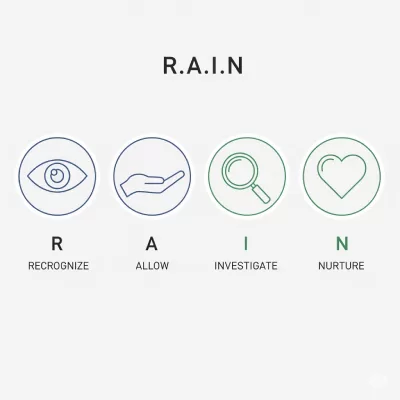
R – Recognize: Acknowledge what is happening. Silently say to yourself, “Ah, this is anger,” or “Sadness is here.” Simply naming the emotion creates a bit of space around it.
A – Allow: Give the feeling permission to be there. This is the opposite of our usual instinct to fight it or push it away. You can say, “It’s okay,” or “This belongs.” You’re not saying you like the feeling, just that you’re allowing it to exist for a moment.
I – Investigate: Get curious, with a gentle and kind attention. Ask yourself: “Where do I feel this most strongly in my body?” “What does this feeling want from me?” “What does it believe?” You are not trying to think your way out of the emotion, but rather to feel its physical and energetic signature.
N – Nurture: Offer yourself what you need most in that moment. This is an act of self-compassion. You might place a hand on your heart and whisper words like, “I’m sorry this is so hard,” or “I am here with you.” You are providing yourself with the care and kindness that you might offer a dear friend.
The Holistic Approach to Stress: Managing Your Nervous System
Stress is one of the most corrosive forces in modern life. The holistic perspective gives us a more empowered way to approach it by understanding the difference between external triggers and our internal response.
“Stress” vs. “Stressors”: A Crucial Distinction
Stressors are the external events: a looming deadline, a traffic jam, a difficult conversation. We often have limited control over these.
Stress is our body’s internal physiological response to those stressors. It’s the flood of cortisol and adrenaline, the tensing of muscles, the shallow breathing.
The revolutionary insight is this: You can learn to manage and regulate your internal stress response, even when you cannot eliminate the external stressors. The key lies in understanding your Autonomic Nervous System.
Your nervous system has two main branches:
Sympathetic (“Fight or Flight”): The accelerator. It prepares you for action and threat.
Parasympathetic (“Rest and Digest”): The brake. It promotes calming, healing, and restoration.
Chronic stress means our “accelerator” is stuck to the floor. The goal is to learn how to consciously apply the “brake.”
Practical Tools for Nervous System Regulation
These are not just “relaxation techniques”; they are real-time biological tools for shifting your physiological state.
The Physiological Sigh: This is the fastest known way to voluntarily calm yourself down. It was discovered by neuroscientists at Stanford and is something we do involuntarily when we sob or sleep.
How to do it: Take two sharp, consecutive inhales through your nose (a big one, and then a little top-up one without exhaling in between). Then, take a long, slow, complete exhale through your mouth. Do this 1-3 times. It works by re-inflating collapsed air sacs in the lungs, allowing for more efficient offloading of carbon dioxide, which signals safety to the brainstem.
Vagal Toning: The Vagus Nerve is the main highway of your “Rest and Digest” system. “Toning” it means strengthening its response.
Simple ways to tone: Loud humming, gargling with water, singing, or splashing your face with cold water. These activities physically stimulate the nerve and engage the parasympathetic brake.
Nature Exposure (“Forest Bathing”): Spending time in nature has been scientifically shown to lower cortisol, reduce blood pressure, and calm the nervous system. Even having a plant on your desk or looking out a window at a tree can have a measurable effect.
Neuroplasticity: How to Rewire Your Brain for Happiness and Resilience
One of the most exciting discoveries in modern neuroscience is neuroplasticity—the understanding that our brain is not a fixed, static organ. It is constantly changing and reorganizing itself based on our thoughts, experiences, and focus.
Think of your brain like a grassy field. When you repeatedly have a negative thought, you walk the same path across the field, carving a deeper and deeper rut that becomes easier and easier to fall into. Neuroplasticity means you have the power to consciously choose to walk a new path—a path of gratitude, self-compassion, or optimism. At first, this new path is difficult, but with repetition, it becomes a well-worn, automatic trail. You can literally rewire your brain.
The Power of a Growth Mindset vs. a Fixed Mindset
Pioneered by Stanford psychologist Carol Dweck, this concept is a powerful application of neuroplasticity.
A Fixed Mindset believes that our intelligence, talents, and personality are static and unchangeable. Failure is seen as a judgment of our core abilities.
A Growth Mindset believes that our abilities can be developed through dedication and hard work. Failure is not a judgment, but an opportunity to learn and grow.
Adopting a growth mindset is fundamental to holistic living. It means seeing challenges not as threats, but as opportunities. It allows you to embrace imperfection, learn from your mistakes, and understand that you are always a work in progress. This mindset shift alone can profoundly reduce stress and increase resilience, creating a mental environment where well-being can flourish.
The Pillar of the Spirit: Nurturing Your Inner World
In our relentless pursuit of physical health and mental productivity, it is easy to neglect the most subtle yet essential part of our being: our spirit. This is not necessarily about religion or dogma. The spiritual pillar of holistic living is about the universal human need for purpose, connection, and meaning. It is the inner compass that guides your choices, the source of your resilience in difficult times, and the wellspring of genuine, lasting joy.
A nourished body and a calm mind are incredible assets, but without a sense of “why,” life can feel empty and directionless. Tending to your inner world is what infuses your actions with significance. It’s the difference between merely existing and truly living.
In this section, we will explore three domains of spiritual well-being: the quest for a life of purpose, the healing power of deep connection, and the simple, daily practices that nourish the soul.
The Quest for Purpose: Uncovering Your “Why”
A sense of purpose is the powerful, underlying reason that gets you out of bed in the morning. It’s not necessarily about finding one single, grand, world-changing mission. For most, purpose is found in the intersection of our unique gifts, our deepest values, and our contribution to the world, no matter how small it may seem. It is the feeling that your life matters and that your energy is being directed toward something meaningful to you.
Ready to Uncover Your Purpose?

Discovering your “Why” is one of the most fulfilling journeys you can undertake. The Japanese concept of Ikigai provides a powerful framework for this exploration. If you want to dive deep into this process, we have a complete guide that walks you through each of the four circles of Ikigai.
Ikigai: The Japanese Concept for a Life of Meaning
The Japanese have a beautiful and practical concept called Ikigai (pronounced “ee-key-guy”), which roughly translates to “a reason for being.” It is not some mystical, unattainable state, but a convergence of four essential elements of life. Finding your Ikigai is believed to lead to a life of profound satisfaction and longevity.
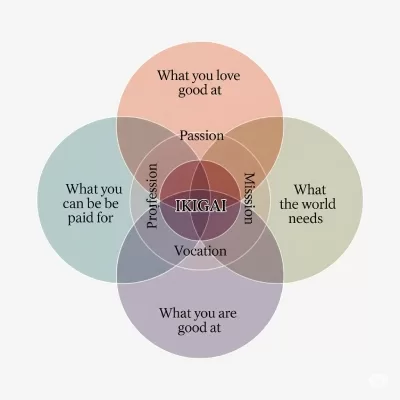
Imagine four overlapping circles:
What You Love: What activities make you lose track of time? What topics are you endlessly curious about?
What You Are Good At: What are your natural talents and learned skills? What do people often ask for your help with?
What the World Needs: What problems in your community or the world touch your heart? What contribution could you make that would be of service to others?
What You Can Be Paid For: How can you create a sustainable living? This grounds your purpose in the practical reality of life.
Your Ikigai lies at the center where all four of these circles meet. But the intersections are also meaningful:
Where what you love meets what you are good at is your Passion.
Where what you are good at meets what you can be paid for is your Profession.
Where what you can be paid for meets what the world needs is your Vocation.
Where what the world needs meets what you love is your Mission.
A truly holistic life aims to integrate all four elements, leading to that central feeling of Ikigai.
From Passion to Purpose: Practical Journaling Exercises
Uncovering your purpose is a process of self-inquiry. There is no external authority who can give you the answer. The clues are already inside you. Use these journaling prompts to start listening. Don’t censor yourself; just write freely.
The Childhood Clue: What did you absolutely love to do as a child, before the world told you what you “should” be?
The “Flow State” Clue: Describe a time you were in a state of “flow,” completely absorbed in an activity. What were you doing?
The “Service” Clue: If you could solve one problem in the world, big or small, what would it be?
The “Energy” Clue: What kinds of activities, conversations, or environments give you energy? Which ones drain your energy?
The “Ideal Day” Clue: If money were no object and you had complete freedom, what would your ideal Tuesday look like from morning to night?
The Healing Power of Connection
Chronic loneliness has been declared a public health epidemic in many parts of the world, with studies showing its health risks are comparable to smoking 15 cigarettes a day. We are biologically wired for connection. It is not a luxury; it is a fundamental human need. The holistic approach recognizes that our health is inextricably linked to the quality of our relationships—with nature, with others, and with ourselves.
Connection to Nature: The Science of “Ecotherapy”
Humans did not evolve in concrete boxes under fluorescent lights. We evolved in intimate relationship with the natural world. Re-establishing this connection is a powerful antidote to the stress and alienation of modern life. The practice of “forest bathing” (Shinrin-yoku in Japan) is now supported by robust science showing that spending time in nature can:
Lower cortisol levels
Reduce blood pressure and heart rate
Boost the activity of immune cells called “natural killer cells”
Improve mood and reduce rumination
Holistic Action: You don’t need to move to the countryside.
Go for a walk in a local park without your phone.
Sit by a tree and consciously observe the details of its bark.
Bring plants into your home.
Listen to recordings of nature sounds like rain or birdsong.

Connection to Community: Finding Your Tribe
A sense of belonging is a core pillar of spiritual and emotional health. This isn’t about having hundreds of social media followers; it’s about having a small, trusted circle of people with whom you can be your authentic self—people who celebrate your joys and support you through your struggles.
Finding your “tribe” as an adult often requires proactive effort.
Pursue Your Interests: Join a book club, a hiking group, a pottery class, or a community garden. Shared interests are the natural starting point for authentic connections.
Prioritize Quality over Quantity: It’s better to have two or three deep, meaningful friendships than dozens of superficial acquaintances.
Be the Friend You Want to Have: Reach out, make plans, listen deeply, and be vulnerable. Connection is a two-way street.
Connection to Self: The Art of Solitude
In our hyper-connected world, we often confuse being alone with being lonely. They are not the same. Loneliness is a painful, involuntary state of isolation. Solitude is the chosen, intentional act of being with yourself. It is in solitude that we can hear our own thoughts, process our emotions, and connect with our deepest intuition.
Holistic Action: Schedule regular “dates” with yourself.
Go for a solo walk or to a café without any device.
Simply sit in silence for 10 minutes and notice what comes up.
Dedicate 30 minutes one evening to tech-free creative time: journaling, drawing, playing an instrument.
Cultivating a comfortable relationship with solitude is a superpower. It means you are never truly alone, because you enjoy your own company.
Simple Practices for Soulful Living
Nurturing your spirit doesn’t require grand gestures or retreats. It is woven into the fabric of daily life through small, consistent practices that cultivate a sense of wonder, appreciation, and joy.
The Transformative Power of a Daily Gratitude Practice
Gratitude is more than just saying “thank you.” It is a powerful mindfulness practice that actively rewires your brain. Our minds have a natural “negativity bias”—an evolutionary hangover that makes us hyper-aware of threats and problems. A gratitude practice trains your brain to actively scan for and acknowledge the good, shifting your entire baseline of well-being.
Holistic Action: The “Three Good Things” practice. Every night before you sleep, write down three specific things that went well that day and briefly reflect on what caused them.
Not just: “My family.”
But: “The way my partner made me a cup of tea this morning without me asking.” This specificity is key. It anchors the positive feeling in a real, tangible memory.
The Role of Play, Creativity, and Awe in Adult Life
As we grow up, we are often told to put away “childish” things. But play, creativity, and awe are not frivolous; they are essential nutrients for the human soul.
Play is any activity you do purely for the joy of it, with no attachment to the outcome. It’s about process, not productivity. It could be kicking a ball around, playing a board game, or being silly with a pet.
Creativity is not just for artists. It is the act of bringing something new into the world. It can be expressed through cooking a new recipe, gardening, writing, coding, or arranging flowers. It connects us to our innate human drive to create.
Awe is the experience of encountering something vast that transcends your current understanding and makes you feel part of something much larger. It can be found in looking up at a star-filled night sky, listening to a breathtaking piece of music, or witnessing an act of profound kindness. Experiencing awe has been shown to decrease focus on the self and increase feelings of connection and generosity.

Holistic Action: Intentionally schedule time for these “soul nutrients.” Give yourself one hour a week for “playtime” with no agenda. Take a different route home to spark your curiosity. Make a point to watch the sunset. These small acts are what keep your inner world vibrant and alive.
Integration: Weaving Holism into Your Daily Fabric
Knowledge is only potential power. True transformation happens when we translate what we know into what we consistently do. The previous sections have armed you with the philosophy and the tools of a holistic life. This section is your bridge from theory to practice. It’s where we take all these beautiful concepts and gently weave them into the real, messy, and wonderful fabric of your daily life.
The goal here is not to create a perfectly optimized, rigid schedule that adds more stress to your life. The goal is to create supportive structures and simple habits that become so natural they feel like an extension of who you are. This is about creating a life that, by its very design, supports your well-being.
The Art of Holistic Routines: Crafting Your Ideal Morning and Evening Rituals
The way you begin and end your day has a disproportionate impact on your overall well-being. A morning routine can set a tone of calm intention for the hours ahead, while an evening routine can prepare your body and mind for deep, restorative sleep.
Think of these not as rigid prescriptions, but as a “menu” of holistic practices from which you can choose to create your own unique rituals. The key is to find what feels nourishing and sustainable for you.
Want to Master Your Mornings?

The simple formula above is a great starting point, but crafting the perfect routine is a personal art. For more ideas, templates for different lifestyles (e.g., for parents, for night owls), and tips on how to stick with your new habit, explore our dedicated guide.
Crafting Your Ideal Morning Routine
The goal of a morning routine is not to be hyper-productive, but to ground yourself and connect with your own needs before giving your energy to the outside world. Avoid grabbing your phone for the first 30-60 minutes of your day. This is your sacred time.
The “Hydrate, Move, Be Still” Formula:
A simple yet powerful formula for a morning routine includes these three elements.
1. Hydrate: Your body is dehydrated after a night of sleep. Before coffee or tea, rehydrate with a large glass of room-temperature water.
Holistic Upgrade: Add a squeeze of fresh lemon for a boost of Vitamin C and a pinch of unrefined sea salt for essential minerals and electrolytes.
2. Move: Gently awaken your body. This doesn’t need to be a full workout.
Options: 5-10 minutes of gentle stretching, a few rounds of Sun Salutations (from yoga), or simply putting on a song you love and dancing freely in your living room. The goal is to get your circulation and energy moving.
3. Be Still: Calm your mind and set your intention for the day.
Options: 5 minutes of the simple breath meditation we discussed in Part 3. Or, try a journaling practice like writing down three things you are grateful for or one intention for the day ahead.

Crafting Your Ideal Evening Routine (The “Wind-Down”)
The goal of an evening routine is to signal to your nervous system that the day is over and it’s time to prepare for rest. This is crucial for high-quality sleep.
The Digital Curfew: This is the most important rule. Turn off all screens (phone, TV, laptop) at least 60-90 minutes before your desired bedtime. The blue light from screens disrupts melatonin production, your sleep hormone.
Dim the Lights: Bright, overhead lights mimic the sun and tell your brain to stay awake. Switch to dim, warm lamps to create a calming, cave-like environment.
The “Brain Dump”: If you have a racing mind at night, do a “brain dump.” Take 5 minutes to write down everything on your mind—your to-do list for tomorrow, worries, random ideas. Getting them out of your head and onto paper releases your mind from the burden of having to remember them.
Engage in a Relaxing Activity:
Take a warm bath with Epsom salts (rich in magnesium).
Read a physical book (not on a screen).
Sip a cup of calming herbal tea, like chamomile or lavender.
Listen to quiet, ambient music or a calming podcast.
Do some very gentle, restorative stretching.
The “One Small Thing” Approach: How to Start Without Overwhelm
Reading a guide like this can be both inspiring and incredibly overwhelming. You might feel a desire to change everything all at once—to start meditating, overhaul your diet, detox your home, and find your purpose all in the same week. This is a recipe for burnout and failure.
The holistic path is not a sprint; it’s a lifelong journey. The most sustainable way to create lasting change is with the “One Small Thing” approach.
Choose One Pillar: Pick one area you want to focus on first. Don’t try to tackle your body, mind, and spirit all at once. Perhaps your sleep feels like the most pressing issue right now.
Choose One Practice: Within that pillar, choose one small, almost laughably easy practice. Not “get 8 hours of perfect sleep,” but “turn off my phone 30 minutes before bed.”
Practice for One Week: Commit to doing only that one small thing every day for one week.
Notice and Build: At the end of the week, notice how it feels. Has it made a difference? Does it feel like a habit? Once it feels integrated, you can either deepen that practice (e.g., move from 30 minutes to 60 minutes of no phone) or choose a new “one small thing” to add.
Examples of “One Small Thing”:
“This week, I will drink one glass of water before my morning coffee.”
“This week, I will take three conscious breaths when I get into my car after work.”
“This week, I will write down one thing I’m grateful for before bed.”
This approach builds momentum and self-efficacy. Every small win gives you the confidence to take the next step, creating a gentle, positive feedback loop of change.
Building a Holistic Support System
You are not meant to do this alone. As we discussed in Part 4, connection is a vital nutrient. Intentionally building a support system can be the difference between sticking with your new lifestyle and falling back into old patterns.
Communicate with Your Inner Circle: Let your close friends and family know what you’re doing and why it’s important to you. You don’t need to convert them, but you can ask for their support. For example: “I’m working on improving my sleep, so I’m trying not to make plans late on weeknights. Could we do a weekend brunch instead?”
Find Like-Minded Community: Seek out others who are on a similar path. This could be a local yoga studio, a hiking group, an online wellness community, or even just one friend who shares your interest in holistic living. Sharing your successes and challenges with people who “get it” is incredibly validating.
Enlist Professional Support: Sometimes, we need expert guidance. Building a team of holistic practitioners can be a powerful investment in your well-being. This might include:
A holistic nutritionist or health coach to guide your dietary changes.
A therapist or counselor, particularly one with a somatic (body-based) or mindfulness focus.
An acupuncturist, massage therapist, or chiropractor to support your physical body.
A meditation teacher or spiritual guide.
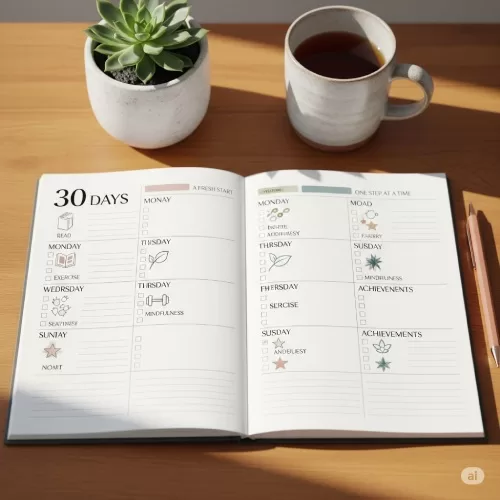
A 30-Day Holistic Living Kickstart Challenge: A Day-by-Day Guide
This challenge is designed to put the “One Small Thing” approach into practice. Each day introduces a single, simple task. The goal is not perfection, but participation. If you miss a day, just pick up where you left off. Use a journal to track your progress and how you feel.
Week 1: Laying the Bodily Foundation
Day 1: Drink a large glass of water immediately upon waking.
Day 2: Go for a 10-minute walk outside at some point during the day.
Day 3: Add one extra serving of vegetables to your lunch or dinner.
Day 4: Put your phone away 30 minutes before your intended bedtime.
Day 5: Do 5 minutes of gentle stretching whenever you feel stiff.
Day 6: Try one new healthy food you’ve never eaten before.
Day 7: Choose one meal to eat slowly and without any screen distractions.
Week 2: Cultivating a Calmer Mind
Day 8: Sit in silence and focus on your breath for just 3 minutes.
Day 9: When you feel a moment of stress, consciously practice the “Physiological Sigh” (two inhales, one long exhale).
Day 10: Write a “brain dump” of everything on your mind before bed.
Day 11: Pay attention to the sensory experience of your morning shower (the warmth, the smell, the sound).
Day 12: Notice and name three emotions you feel throughout the day without judging them.
Day 13: Read a chapter of a physical book.
Day 14: Unfollow 5 social media accounts that make you feel bad about yourself.
Week 3: Nurturing Your Spirit & Connection
Day 15: Before bed, write down three specific things you were grateful for today.
Day 16: Spend 10 minutes in nature (a park, your backyard) and notice 5 beautiful things.
Day 17: Reach out to a friend you haven’t spoken to in a while, just to say hello.
Day 18: Listen to a piece of music that gives you goosebumps or a feeling of awe.
Day 19: Do something purely for fun for 15 minutes (play).
Day 20: Engage in a creative act: doodle, write a poem, cook a new recipe without strictly following it.
Day 21: Practice a random act of kindness for a stranger (e.g., let someone go ahead of you in line).
Week 4: Integration and Rhythm
Day 22: Design your own ideal 15-minute morning routine based on the “Hydrate, Move, Be Still” formula.
Day 23: Practice your new morning routine.
Day 24: Design your own ideal 30-minute “wind-down” evening routine.
Day 25: Practice your new evening routine.
Day 26: Mindfully plan one nourishing meal for tomorrow.
Day 27: Look back at your journal. What was the most impactful practice from the last 26 days?
Day 28: Do that one most impactful practice again today with full intention.
Day 29: Choose your “One Small Thing” to carry forward into the next month.
Day 30: Reflect on your journey. Acknowledge yourself for dedicating a month to your well-being. Celebrate your progress, no matter how small.
My Recommended Tools for Your Journey
Embarking on a holistic lifestyle is a journey of implementing small, consistent changes. Over the years, I’ve found certain tools to be exceptionally helpful in supporting this path. These are a few of my trusted favorites.
For Daily Stillness: The Insight Timer app. It’s a wonderful free resource with thousands of guided meditations, timers, and calming music tracks to support your mindfulness practice.
For Foundational Gut Support: As we’ve discussed, all health begins in the gut. While food is the primary medicine, I rely on this specific all-in-one probiotic and prebiotic blend for consistent and powerful daily support. It simplifies gut health and provides a robust foundation for your entire well-being.
For Deeper Learning: The book “When the Body Says No” by Dr. Gabor Maté is an essential read for anyone wanting to understand the deep connection between stress, emotions, and physical health.
This challenge is a starting point. It’s a way to experience the different facets of holistic living and discover what resonates most deeply with you.
Your Journey Begins Now
We have traveled through the interconnected realms of the body, the mind, and the spirit. We have explored the power of nourishing food, mindful movement, restorative sleep, and a supportive environment. We have delved into the practices of mindfulness, emotional intelligence, and nervous system regulation. We have uncovered the deep human needs for purpose, connection, and awe.
You now hold the blueprint. You have the knowledge, the tools, and the practices to begin crafting a life of profound well-being, vibrancy, and meaning. But the most important principle of all comes now, as you prepare to close this guide and step back into your life.
Embracing Imperfection on the Holistic Path
If this guide has left you with a list of one hundred things you feel you “should” be doing, then it has not fully served its purpose.
Holistic living is not a destination of perfection to be reached. It is a practice of compassionate presence to be inhabited, moment by moment.
There will be days when you eat processed food, skip your meditation, scroll on your phone before bed, and react impatiently to a loved one. These moments are not failures. They are human. They are part of the journey. The goal is not to never step off the path; the goal is to learn to return to it with ever-increasing kindness and self-compassion.
Think of these principles not as a rigid set of rules, but as a compass. A compass doesn’t tell you how to navigate the specific rivers, mountains, and forests on your journey. It simply orients you, always pointing you toward your True North. When you feel lost or off-track, you don’t berate yourself. You simply pull out your compass, see where you are, and gently adjust your course.
Your self-compassion is the most important tool you possess. It is the soil from which all growth, healing, and transformation will bloom.
A Final Blessing for Your Journey Ahead
As you move forward from this page, may you remember to see yourself not as a project to be fixed, but as a whole and wondrous being to be nourished.
May you honor the wisdom of your body, its cycles, and its quiet whispers.
May you greet your thoughts and emotions with curiosity and kindness, remembering that you are the calm sky, not the passing weather.
May you feel your deep connection to the earth beneath you, the community around you, and the unwavering spirit within you.
And above all, may you walk this path with patience, with grace, and with a profound sense of reverence for the beautiful, interconnected journey of your own life.
Your journey begins now.
A Gentle Reminder: Your health journey is beautifully unique. While we are passionate about providing supportive and educational content, please remember that the information in this article is for informational purposes only and is not a substitute for professional medical advice. We encourage you to partner with a qualified healthcare professional who can guide you on your specific needs. Always consult your doctor before making significant changes to your diet or lifestyle.