A Guide to True Self-Care

What is Self-Care, Truly? (Hint: It’s Not an Indulgence)
Ask someone what “self-care” means, and you’ll likely get a familiar list of images: a bubble bath with rose petals, an expensive face mask, a decadent piece of chocolate cake, a weekend getaway. These things can be lovely, but they represent a superficial, commercialized version of a concept that is, in reality, far more profound and essential.
These fleeting moments of indulgence are often used as temporary escapes from a life that feels unsustainable and depleting.
True self-care is not an escape from your life; it is the practice of building a life you don’t need to escape from.
At its core, self-care is the continuous, intentional practice of meeting your own needs—physical, mental, emotional, and spiritual—so that you can move through the world as a whole, resilient, and well-resourced human being. It is not selfish; it is the foundational act of self-respect that makes everything else possible. It is the boring, daily, and often unglamorous work of showing up for yourself, even when you don’t feel like it.
It’s drinking a glass of water when you wake up. It’s saying “no” to a commitment that would drain you. It’s forgiving yourself after a mistake. It’s moving your body in a way that feels good. It’s the radical act of treating yourself with the same care and compassion you would offer to a beloved friend.
From “Treat” to “Practice”: The Paradigm Shift You Need to Make
The most crucial step in building a life rich in self-care is a mental one. It’s shifting your perspective from seeing self-care as a “treat” to understanding it as a “practice.”
A treat is an occasional reward. It’s something you feel you have to “earn” after a period of hard work or suffering. It’s often reactive—”I’ve had a terrible week, so I deserve this.” This mindset keeps self-care in the realm of luxury and indulgence.
A practice is a consistent, proactive discipline. It’s not something you earn; it’s something you do to maintain your baseline of well-being. It is the foundational maintenance that keeps your system running smoothly. You don’t “earn” the right to brush your teeth; you do it every day because it’s essential for your health.
True self-care is like brushing your teeth for your soul. It’s the small, consistent actions that prevent decay and maintain strength over the long term.
Why Is Self-Care So Difficult in the Modern World?
If self-care is so essential, why is it so hard to practice? We live in a culture that often glorifies the opposite. We are praised for burnout, for “hustling” until we’re exhausted, for putting everyone else’s needs before our own, and for being endlessly productive.
We face several modern barriers:
The Cult of “Busy”: We often wear our busyness as a badge of honor, equating a packed schedule with a life of importance.
Pervasive Guilt: Many of us, especially women, are socialized to be caretakers. Taking time for ourselves can trigger deep feelings of guilt, as if we are being selfish or letting others down.
Decision Fatigue: We make thousands of tiny decisions every day. The thought of adding “plan my self-care” to the to-do list can feel exhausting in itself.
Commercialization: We are told that self-care is something you must buy—the expensive candle, the luxury retreat. This makes it feel inaccessible and adds a layer of financial pressure.
This guide is designed to dismantle these barriers. It will show you that true self-care is accessible, often free, and can be woven into the small moments of your existing life.
The 7 Dimensions of Self-Care: Your Roadmap to Whole-Being Nourishment
To practice self-care effectively, we must first understand that our needs are multi-faceted. Just as a plant needs sunlight, water, and healthy soil, we need to tend to different aspects of our being. This guide is structured around the seven key dimensions of holistic self-care.
1 – Physical Self-Care: Honoring the needs of your body through nourishment, movement, rest, and your physical environment.
2 – Mental Self-Care: Cultivating a calm, clear, and stimulated mind through practices that reduce clutter and foster learning.
3 – Emotional Self-Care: Learning to acknowledge, process, and honor your full spectrum of feelings with compassion.
4 – Social Self-Care: Nurturing life-giving relationships and creating a supportive community around you.
5 – Spiritual Self-Care: Connecting to your sense of meaning, purpose, and something larger than yourself.
6 – Practical Self-Care: Managing the day-to-day responsibilities of your life (like finances and home organization) in a way that reduces stress.
7 – Professional Self-Care: Creating a work life that is sustainable, fulfilling, and aligned with your values.
In the sections to come, we will take a deep dive into each of these dimensions, providing you with the philosophy, the science, and most importantly, the simple, practical tools to begin your journey of radical self-nourishment.
The Physical Dimension: Honoring Your Body’s Needs
Your self-care journey begins with your body. It is your home, the vessel through which you experience the world, and an incredibly wise system that is constantly communicating with you. Physical self-care is not about achieving a society-imposed aesthetic ideal; it is about a deep respect for and listening to your body’s fundamental needs.
It is the act of providing your body with the resources it needs to function optimally, not as a punishment or a chore, but as an expression of gratitude for its tireless work. This dimension is the foundation upon which mental and emotional well-being can be built. Without a well-tended body, it is exponentially harder to find the energy for mental clarity or emotional resilience.
In this section, we will explore the four essential pillars of physical self-care: Nourishment, Movement, Sleep, and The Body Environment.
Nourishment: Self-Care on Your Plate
Every meal is an opportunity to practice self-care. Holistic nourishment is not about restrictive diets, calorie counting, or guilt. It is a mindful and pleasurable approach to fueling your body with foods that energize, heal, and satisfy you.
Food as Information: View food not just as calories, but as packets of information that instruct your cells. Whole, nutrient-dense foods send signals of vitality and repair. Highly processed, nutrient-poor foods send signals of stress and inflammation.
Eat Intuitively: Food self-care means re-learning to listen to your body’s cues. Eat when you’re hungry. Stop when you’re satisfied, not stuffed. Notice how different foods make you feel. Your body has an innate wisdom; your job is to create the quiet to hear it.
The Practice of Hydration: One of the simplest and most profound forms of physical self-care is staying properly hydrated. Water is essential for energy levels, brain function, digestion, and skin health. Start your day with a glass of water to rehydrate your system.
Cooking as a Meditative Act: The act of preparing your own food can be a powerful mindfulness practice. Engage your senses: the smell of garlic sautéing, the vibrant colors of vegetables, the texture of grains. Cooking can transform from a chore into a form of creative, self-nurturing care.

Movement: Self-Care for Your Energy and Emotion
Movement, at its core, is a celebration of what your body can do. The self-care approach to movement frees you from the “punishment” mindset of exercise, which sees it as a way to burn calories or fix perceived flaws.
Joyful Movement: The most sustainable form of movement is the one that brings you joy. What does your body love to do? Is it dancing in the living room, hiking in nature, swimming, lifting weights, or practicing gentle yoga? Joy is the secret ingredient that turns exercise from a task into a form of play and self-expression.
Moving to Process Emotion: Your body stores emotion and stress. Movement is one of the most effective ways to process and release that stagnant energy. An intense run can release anger, a gentle stretch can soothe anxiety, and an energetic dance can lift a low mood.
Listening Instead of Pushing: Self-care in movement means honoring what your body needs on any given day. Some days, it might crave a high-intensity workout. On others, what your body truly needs might be a restorative walk or a gentle stretch. Attunement replaces relentless pushing.
Sleep: The Ultimate Act of Physical Restoration
In our productivity-obsessed culture, sleep is often the first thing to be sacrificed. This is an act of self-aggression. Sleep is not a luxury; it is the most critical and foundational self-care practice for your physical, mental, and emotional health.
Your Body’s Night Shift: It is during sleep that the magic happens. Your brain detoxifies itself, your memories are consolidated, your hormones regulate, your muscles repair, and your immune system recharges. Neglecting sleep is undermining every other self-care effort you make.
Create a Sleep Sanctuary: Your bedroom should be a haven for rest. Treat your sleep hygiene as a sacred ritual. Keep the room dark, cool, and quiet. Avoid screens for at least an hour before bed, as the blue light interferes with melatonin production.
A Wind-Down Routine: Create a relaxing routine that signals to your body it’s time to prepare for sleep. This could include taking a warm bath, reading a book (a physical one, not on a screen), listening to calm music, journaling, or meditating.

The Body Environment: Skin Care, Hygiene, and Your Physical Space
Physical self-care also extends to how we care for our outer shell and the space we inhabit.
Body & Skin Care Rituals: Skincare doesn’t have to be about expensive, anti-aging products. It can be a simple, sensory ritual that connects you to your body. The act of massaging an oil into your body after a shower, the feeling of a dry brush on your skin, or the warmth of a hot towel on your face can be profoundly grounding, mindful moments.
Dressing with Intention: The clothes you wear affect how you feel. Self-care can be as simple as choosing to wear something that makes you feel comfortable, confident, and authentic, rather than something you feel you “should” wear.
Your Physical Space: Your home environment is a reflection of your inner state. A cluttered, chaotic space can contribute to mental stress. Practical self-care involves creating an environment that feels calm, organized, and supportive. It doesn’t need to be perfect, but it should be a place where you feel safe and can truly relax.
Tending to your body in a holistic way is the first step toward building a life where you feel supported, energized, and at home in your own skin.
The Mental Dimension: Cultivating a Calm and Clear Mind
Your mind is your primary tool for navigating the world. It’s the lens through which you interpret every experience, the command center for your decisions, and the source of your creativity and imagination. When this space is cluttered, chaotic, and overstimulated, life can feel overwhelming and exhausting, no matter how well you care for your physical body.
Mental self-care is the practice of tending to your mind with the same intention you give to your physical health. It’s not about forcing “positive thinking” or never having a negative thought. It is the art of creating an internal environment that fosters clarity, reduces mental friction, and allows for greater focus and peace.
It involves actively managing the information you consume, challenging your thought patterns, and setting boundaries with the digital world. Let’s explore four key practices for cultivating a healthy mental landscape.
Mental Decluttering: Managing Information Overload and Decision Fatigue
In the digital age, our minds are constantly bombarded with an unprecedented amount of information—emails, news alerts, social media feeds, and an endless stream of content. This leads to two common modern ailments:
Information Overload: When your brain receives more input than it can process, it leads to a feeling of being scattered, anxious, and unable to focus.
Decision Fatigue: The sheer number of trivial decisions we have to make each day (what to wear, what to eat, which email to answer first) depletes our finite willpower, leaving us less equipped to make important decisions.
Mental decluttering is the self-care practice of intentionally simplifying and organizing your mental space.
The “Brain Dump”: One of the most effective techniques is the brain dump. At the end of the day or first thing in the morning, take a piece of paper and write down everything that’s on your mind—worries, to-do list items, random ideas, nagging thoughts. The act of externalizing these thoughts onto paper frees your mind from the burden of having to hold onto them.
Batch Similar Tasks: Instead of checking emails every 10 minutes, designate two or three specific times per day to process them all at once. Batching similar tasks reduces “context switching,” the mental energy it takes for your brain to shift between different types of activities.
Limit Trivial Choices: Reduce decision fatigue by routinizing small decisions. Plan your meals for the week, lay out your clothes the night before, or create a simple morning routine. This saves your precious mental energy for the decisions that truly matter.

The Self-Care of Lifelong Learning and Curiosity
A healthy mind is a curious mind. Mental self-care isn’t just about reducing stress; it’s also about actively stimulating your intellect in ways that feel expansive and joyful. Engaging in lifelong learning keeps your brain neuroplastic—able to form new connections and adapt—and fosters a sense of growth and vitality.
Learn for Pleasure, Not Just for Work: Step outside of your professional obligations. Read a book on a topic you know nothing about, watch a documentary on art or science, learn a few phrases in a new language with an app, or take an online course in a skill you’ve always been curious about, like pottery or coding.
Cultivate a “Beginner’s Mind”: Approach new things with a sense of open curiosity, without the pressure to be an expert. The goal is the process of learning and discovery itself, which is a powerful way to stay engaged and prevent mental stagnation.
Ask More Questions: Get curious about the world around you. Ask questions and then actively seek the answers. This simple practice can reignite a sense of wonder and make the world feel more interesting and alive.
Mindfulness as Mental Self-Care: Quieting the Inner Critic
As we discussed in our deep dive on mindfulness, the practice is a foundational tool for mental health. One of its most powerful applications is in changing our relationship with our “inner critic”—that persistent inner voice that judges, doubts, and berates us.
You Are Not Your Thoughts: The most profound insight from mindfulness is the realization that you are not your thoughts. Your thoughts are simply mental events that arise and pass away in your awareness. You are the observer of your thoughts, not the thoughts themselves.
The Practice of “De-fusion”: This is the act of creating space between you and your thoughts. When the inner critic starts its monologue (“You’re not good enough,” “You’re going to fail”), instead of believing it implicitly, you can learn to observe it.
Labeling Your Thoughts: A simple yet powerful practice is to label the thought. When a critical thought arises, you can say to yourself, “Ah, there’s the inner critic again,” or simply, “Thinking.” This simple label reframes the thought from an absolute truth to a transient mental event, stripping it of its power.
Digital Boundaries: The Most Important Modern Self-Care Practice
Our devices are incredible tools, but they are also designed to be addictive, fragment our attention, and fuel social comparison. Setting conscious boundaries with technology is arguably one of the most critical acts of mental self-care in the 21st century.
Create Tech-Free Sanctuaries: Designate certain times and places as screen-free. The two most important are:
The Dinner Table: Allows for mindful eating and connection with others.
The Bedroom: Protects your sleep and creates a space for rest and intimacy. Charge your phone in another room.
Schedule “Unplug” Times: Just as you schedule meetings, schedule time to be disconnected. This could be the first hour of your day, a “tech-free Sunday,” or simply a 30-minute walk without your phone.
Curate Your Digital Garden: Your social media feed is a mental environment you are curating. Be a ruthless gardener. Unfollow any account that consistently makes you feel anxious, inadequate, or angry. Actively follow accounts that inspire, educate, or bring you joy.
Turn Off Non-Essential Notifications: Every buzz and beep is an interruption that hijacks your focus. Go into your phone’s settings and turn off notifications for everything except truly essential apps (like phone calls or messages from key people). This puts you back in control of when you engage with your phone, not the other way around.

By actively decluttering your mind, staying curious, observing your inner critic, and setting firm digital boundaries, you create the mental space necessary for peace, creativity, and deep, focused work.
The Emotional Dimension: Befriending Your Inner World
If our mind is the house we live in, our emotions are the ever-changing weather system that moves through it. For many of us, this inner weather is turbulent and frightening. We are taught to suppress “bad” emotions like anger and sadness, and to chase “good” ones like happiness. This creates a constant internal battle, which is the very opposite of self-care.
Emotional self-care is the gentle yet radical practice of allowing yourself to feel the full spectrum of your human experience. It is not about controlling your feelings, but about learning to befriend them. It is the art of creating a safe internal space where all emotions are welcome, honored as messengers, and processed with compassion.
A dysregulated emotional state directly impacts your physical health through stress hormones and inflammation, and clouds your mental clarity. Tending to your emotional world is therefore not an optional extra; it is essential work for a truly holistic life. Here, we explore four foundational practices: emotional literacy, setting boundaries, self-compassion, and finding healthy outlets.

Emotional Literacy: Learning the Language of Your Feelings
You cannot care for something you do not understand. Emotional literacy is the foundational skill of being able to recognize, name, and understand your own feelings. Without it, our inner world is a confusing storm of “good” or “bad” sensations. We react impulsively, numb ourselves, or feel overwhelmed, all because we can’t identify what’s actually going on.
The “Name It to Tame It” Principle: Neuroscientists have shown that the simple act of putting a label on an emotion can reduce its intensity. When you can move from a vague feeling of “argh, I feel terrible” to “I am feeling disappointed and frustrated,” you shift from being consumed by the feeling to being an observer of it. This creates space for a conscious response.
Holistic Action: The Daily Emotional Check-in.
Set a reminder on your phone once or twice a day to simply pause and ask yourself, “What am I feeling right now?” Try to be specific. Instead of “stressed,” could it be “overwhelmed,” “under-appreciated,” or “inadequately prepared”? Use an Emotions Wheel (procure no Google) as a tool to expand your emotional vocabulary.
The Profound Self-Care of Setting Boundaries
Boundaries are the most powerful and direct form of emotional self-care. A boundary is not a wall you build to shut people out. It is a clear line you draw to protect your energy, your time, and your well-being. It is a statement of self-respect. Without boundaries, you are telling the world (and yourself) that your needs come last.
Burnout, resentment, and chronic frustration are often symptoms of poorly held boundaries. Setting them can be uncomfortable at first, especially if you’re used to being a “people-pleaser,” but it is a skill that can be learned.
Types of Boundaries to Consider:
Time Boundaries: “I am available to discuss this between 9 AM and 5 PM.”
Emotional Boundaries: “I have the capacity to listen to you right now, but I’m not able to help you solve this.”
Digital Boundaries: “I turn my phone off after 9 PM to protect my sleep.”
Physical Boundaries: Clearly stating your comfort level with touch or personal space.
Holistic Action: Practice a simple, kind script.
You don’t need to be harsh. A clear, kind “no” is a complete sentence. Try this formula: “Thank you for thinking of me. Unfortunately, I don’t have the capacity for that right now.” You don’t need to over-explain or justify your decision.
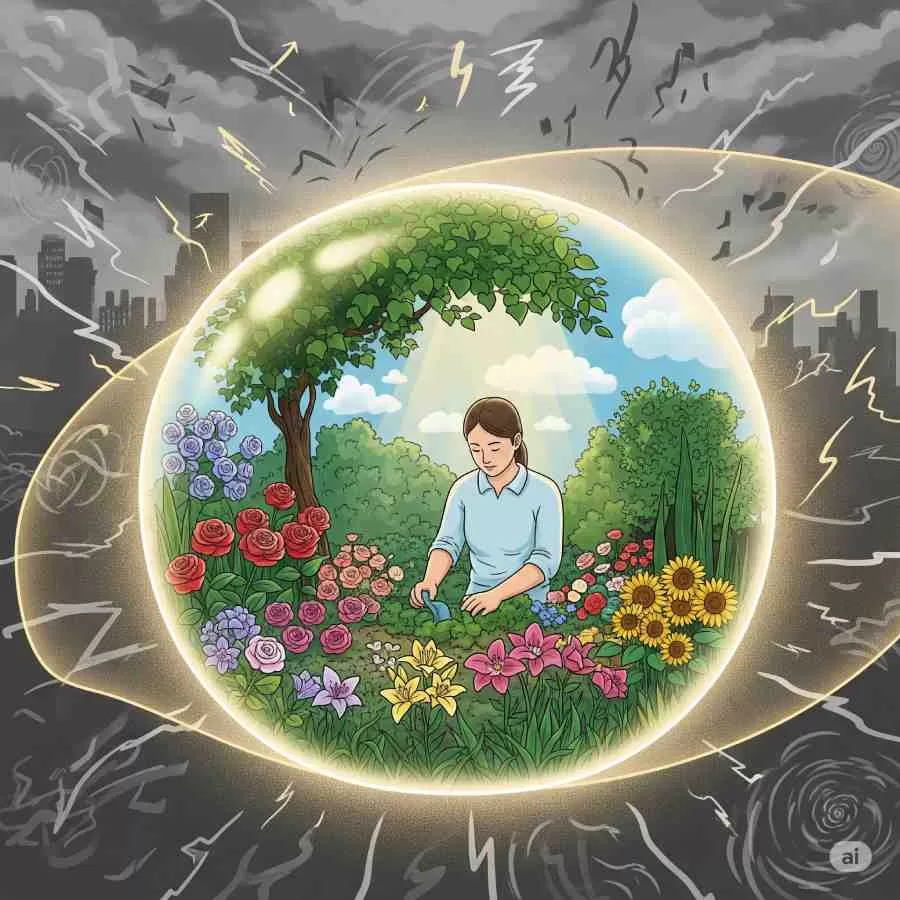
Self-Compassion: The Antidote to Shame and Perfectionism
Your inner critic is often the harshest and most relentless source of emotional distress. Self-compassion is the practice of turning your innate capacity for kindness inward. It is treating yourself with the same care and understanding you would offer to a dear friend who was struggling. According to researcher Dr. Kristin Neff, it has three core components:
1 – Self-Kindness vs. Self-Judgment: Being warm and understanding toward ourselves when we suffer, fail, or feel inadequate, rather than ignoring our pain or flagellating ourselves with self-criticism.
2 – Common Humanity vs. Isolation: Recognizing that suffering and personal inadequacy are part of the shared human experience – something that we all go through rather than being something that happens to “me” alone.
3 – Mindfulness vs. Over-Identification: Taking a balanced approach to our negative emotions so that feelings are observed with openness and clarity, without being suppressed or exaggerated.
Holistic Action: The Self-Compassion Break.
When you are in a moment of struggle, try this simple 3-step practice.
Place a hand gently on your heart.
Say to yourself, “This is a moment of suffering.” (Mindfulness)
Then say, “Suffering is a part of life.” (Common Humanity)
Finally, say, “May I be kind to myself in this moment.” (Self-Kindness)
Healthy Outlets: Processing Emotions Through Creativity and Expression
Emotions are energy in motion (e-motion). When we don’t give them a healthy outlet, they become stagnant and can manifest as physical tension, anxiety, or outbursts. Emotional self-care involves creating intentional channels to allow this energy to move through and out of your system.
A Menu of Healthy Outlets:
Physical Release: Sometimes you need to move the emotion out of your body. This can look like an intense workout, dancing wildly to loud music, or even screaming into a pillow.
Creative Expression: Channel the emotional energy into a creative act. Journaling is a classic and powerful tool for untangling your thoughts. Painting, drawing, playing music, or even gardening can be profound forms of emotional processing.
Verbal Processing: Talking about your feelings with a trusted friend, partner, or therapist can be incredibly validating and can help you gain perspective. The key is to share with someone who can listen without judgment.
By learning to listen to your emotions, setting clear boundaries, treating yourself with compassion, and giving your feelings a healthy outlet, you build a resilient and trusting relationship with your inner world.
The Social Dimension: Nurturing Healthy Connections
Humans are social creatures, wired for connection. We cannot thrive in isolation. While solitude is a vital practice for self-connection, a sense of belonging and community is equally essential for our well-being. The quality of our relationships is one of the single greatest predictors of our long-term health and happiness.
Social self-care is the intentional practice of nurturing relationships that are supportive, reciprocal, and life-giving, while learning to protect our energy from those that are draining. It is not about being a social butterfly or having a packed calendar; it’s about cultivating a supportive ecosystem of human connection that honors our capacity and needs.
This dimension of self-care involves three courageous practices: curating your social circle, learning to ask for help, and mastering the art of saying “no.”
The Self-Care of a Curated Social Circle
The adage “You are the average of the five people you spend the most time with” holds a profound truth. The people in our lives are part of our environment, and their energy directly impacts our own. Social self-care means consciously choosing who gets access to your precious time and energy.
Conduct an “Energy Audit”: Think about the key people in your life. After you spend time with them, do you generally feel energized, seen, and inspired? Or do you feel drained, anxious, and diminished? This isn’t about judging people as “good” or “bad,” but simply about recognizing the energetic exchange in your relationships.
Nurture the “Radiators”: Identify the “radiators” in your life—the people who radiate warmth, support, and positivity. Make an intentional effort to invest more time and energy in these relationships. A quick text, a scheduled phone call, or a coffee date can be powerful acts of social self-care.
Create Distance from the “Drains”: We all have “drains”—people who, for whatever reason, consistently deplete our energy. Self-care sometimes means lovingly creating distance. This doesn’t have to be a dramatic confrontation. It can mean limiting your time together, choosing not to engage in draining topics of conversation, or simply giving yourself permission to decline their invitations without guilt. Remember, quality of connection is far more important than quantity of connections.

Asking for Help: Debunking the Myth of Radical Self-Sufficiency
Our culture often glorifies a rugged individualism, the idea that being “strong” means never needing anyone and handling everything on our own. This is a myth, and it is a direct path to burnout and isolation.
Asking for help is not a sign of weakness; it is a sign of self-awareness and strength. It is recognizing that you are human, that you have a limited capacity, and that we are all interdependent.
Vulnerability Builds Connection: When you ask for help, you give others the gift of being able to contribute to your life. This act of vulnerability deepens trust and strengthens relationships. It turns a one-way street of you always “giving” into a two-way exchange of mutual support.
Prevent Burnout: You do not have to carry the weight of the world on your shoulders. Whether it’s asking your partner for help with chores, delegating a task at work, or reaching out to a friend to talk through a problem, asking for support is a critical tool for preventing overwhelm.
How to Ask: Keep it simple and direct.
“I’m feeling really overwhelmed with [task]. Would you be willing to help me with it?”
“I’m struggling to make a decision about [problem]. Could I borrow your perspective for a few minutes?”
“I’m having a tough day. Do you have a moment to just listen?”

The Power of Saying “No”: Protecting Your Energy and Time
This is one of the most challenging yet liberating acts of self-care. Every time you say “yes” to something, you are implicitly saying “no” to something else.
A “yes” to a social event you don’t want to attend is a “no” to a quiet evening of rest.
A “yes” to taking on an extra project at work is a “no” to your available time and energy for your family or personal projects.
A “yes” to a request that violates your values is a “no” to your own integrity.
Saying “no” is not about rejection; it is about energy management. It is the essential boundary that allows you to direct your finite resources toward the people and priorities that matter most to you.
“No” is a Complete Sentence: You do not owe anyone a long, elaborate excuse. A simple, polite refusal is sufficient.
Practice with Small Stakes: If saying “no” is hard for you, start small. Decline an offer for a store credit card. Say “no, thanks” when offered a dessert you don’t really want. Practice flexing this muscle in low-stakes situations.
Use a Kind and Clear Script: You can be both firm and compassionate.
“Thank you so much for the invitation, but I won’t be able to make it.”
“I really appreciate you thinking of me for this project, but my plate is full right now and I can’t give it the attention it deserves.”
By curating your social circle, embracing the strength in asking for help, and learning to say a graceful “no,” you create a social life that is a source of nourishment and support, not a source of depletion and stress.
The Spiritual Dimension: Connecting to Meaning and Purpose
Beneath the hustle of our daily lives, beyond our physical needs and mental chatter, lies a deeper human longing: a need for meaning, connection, and a sense of belonging to something larger than ourselves. This is the realm of the spiritual dimension of self-care.
It’s crucial to understand that “spiritual” self-care is not necessarily about religion. While for some, it may involve organized religion, the concept in a holistic context is much broader and more inclusive. It is the practice of nourishing your soul, your inner essence, and your connection to the values that guide your life.
Spiritual self-care is about asking the big questions: “Who am I?”, “What matters most to me?”, “What is my purpose?”. It is the act of intentionally creating space for quiet reflection, awe, and gratitude. Neglecting this dimension can leave us feeling adrift, empty, and disconnected, even if all our other needs are being met.

Spiritual Self-Care: Beyond Religion
Think of your spirit as your core self—the unwavering part of you that observes your thoughts, feels your emotions, and holds your deepest values. Spiritual self-care is any practice that allows you to connect with this core. The goal is to cultivate a strong inner anchor in a world of constant change.
This can be expressed through countless secular avenues:
Connection to your values: Living in a way that is aligned with what you hold to be most important (e.g., honesty, compassion, creativity).
Connection to nature: Feeling a part of the larger web of life.
Connection to humanity: Recognizing our shared experience of joy and suffering.
Connection to your purpose (Ikigai): Directing your energy toward something that feels meaningful to you.
Spiritual self-care is what provides the “why” that fuels all your other self-care practices.
Practices for Connection: Time in Nature, Gratitude, and Journaling
Nurturing your spiritual side doesn’t require a pilgrimage or a retreat. It can be woven into your life through simple, consistent practices.
Time in Nature (Ecotherapy): As we’ve discussed, spending time in the natural world is a powerful balm for the human soul. From a spiritual perspective, it does more than just calm our nervous system; it instills a sense of awe and perspective. When you stand at the foot of an ancient tree or gaze up at a star-filled sky, your own problems and worries are often put into a healthier context. You are reminded that you are part of a vast, beautiful, and resilient ecosystem.
Gratitude: Gratitude is a spiritual practice because it shifts our focus from a mindset of scarcity to one of abundance. It trains our attention on the goodness, grace, and beauty that already exist in our lives. A daily gratitude practice—simply noting three specific things you are thankful for—is one of the fastest ways to connect with a sense of well-being and shift your entire emotional state.
Journaling: Journaling is a form of conversation with your inner self. It’s a sacred space where you can untangle your thoughts, explore your feelings, and ask yourself the big questions without fear of judgment. It is a powerful tool for self-discovery and for clarifying the values that you want to guide your life.
The Self-Care of Solitude and Reflection
In a world that fears silence and celebrates constant connection, choosing solitude is a radical act of spiritual self-care. It’s important to distinguish solitude from loneliness. Loneliness is a painful state of feeling disconnected. Solitude is the intentional and peaceful act of being with yourself.
It is only in the quiet of solitude that we can begin to hear the subtle whispers of our own intuition—our inner wisdom. Our modern lives are so filled with external noise (podcasts, social media, news, the opinions of others) that our own inner voice is often drowned out.
Holistic Action: Schedule Solitude
A Silent Walk: Go for a walk without your phone, without music, without a podcast. Just walk and observe, both your inner and outer world.
A “Do-Nothing” Break: Set a timer for 10 minutes, sit in a comfortable chair, and give yourself permission to do absolutely nothing. Don’t try to meditate or be productive. Simply sit and be.
An Artist Date: As coined by author Julia Cameron, an “artist date” is a scheduled block of time (e.g., one hour per week) to do something creative and fun, just for you, by yourself. Go to a museum, a bookstore, or a beautiful park. It’s a way to nurture your creative spirit and enjoy your own company.

By intentionally making time for practices that connect you to your values, to the world around you, and to your own inner wisdom, you nourish the part of you that provides context, meaning, and direction for your entire life.
The Practical Dimension: Weaving Self-Care into Real Life
We now understand the what and the why of holistic self-care. We have a rich palette of practices for our body, mind, emotions, and spirit. But the gap between knowing and doing can feel like a chasm. This is the practical dimension: the art of translating noble intentions into real-world, sustainable action, especially when life gets busy, stressful, or demanding.
This section is your toolkit. It’s designed to help you move beyond the idea of self-care and into the lived experience of it. We will cover how to create a personalized plan, how to practice self-care when you have no time, how to build lasting habits, and how to overcome the most common barriers that stand in our way.
The “Self-Care Menu”: Creating Your Personalized Toolkit
One of the biggest hurdles to practicing self-care when you need it most—when you’re stressed or depleted—is decision fatigue. The last thing you have the energy for is trying to figure out what might make you feel better. The solution is to create a “Self-Care Menu” ahead of time.
This is your personalized, pre-approved list of nourishing activities that you can turn to in times of need. It removes the guesswork and makes self-care an easy choice.
Holistic Action: Create Your Menu
Take a piece of paper or a page in your journal and divide it into the dimensions we’ve discussed. Brainstorm at least 2-3 activities you genuinely enjoy for each category. Keep it simple and accessible.
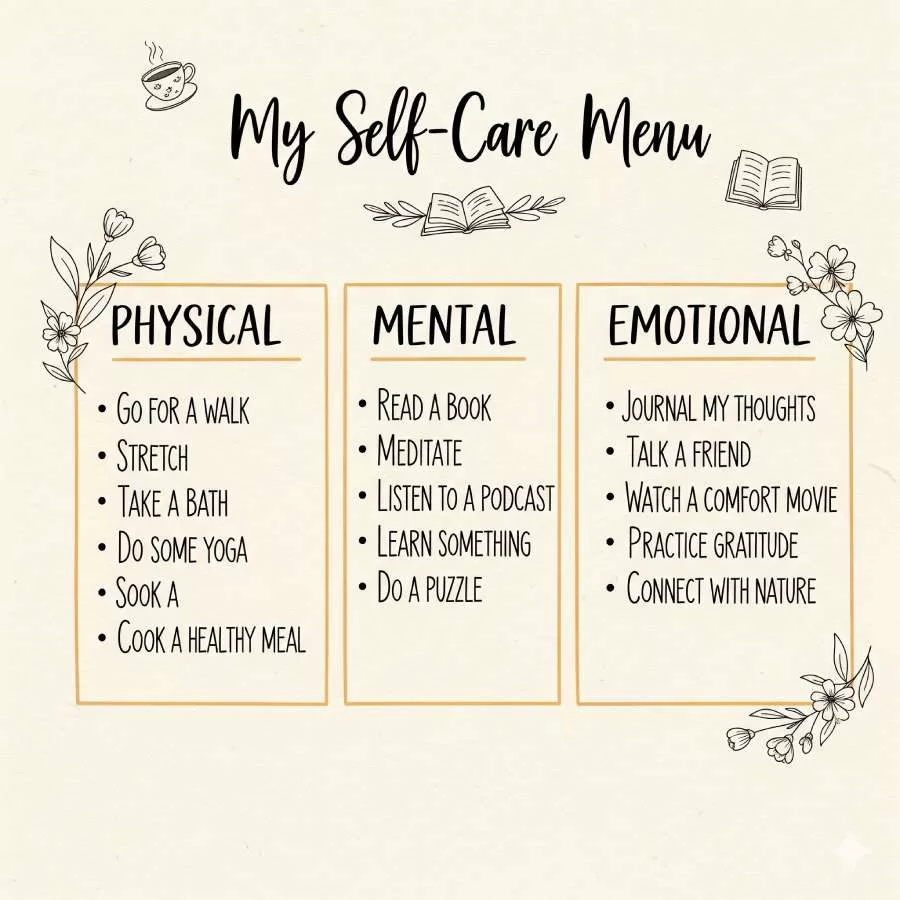
Example Self-Care Menu:
Physical:
A 15-minute walk outside
Taking a warm Epsom salt bath
Doing 10 minutes of gentle stretching
Mental:
Reading a chapter of a book for pleasure
Doing a “brain dump” in my journal
Listening to an inspiring podcast
Emotional:
Calling a supportive friend
Watching a movie that makes me laugh or cry
Spending 5 minutes journaling about my feelings
Social:
Scheduling a coffee date with a friend
Having a device-free dinner with my partner
Spiritual:
Spending time in my garden or a park
Writing down three things I’m grateful for
Practical:
Paying one bill or tackling one small organizational task
Planning my meals for the next two days
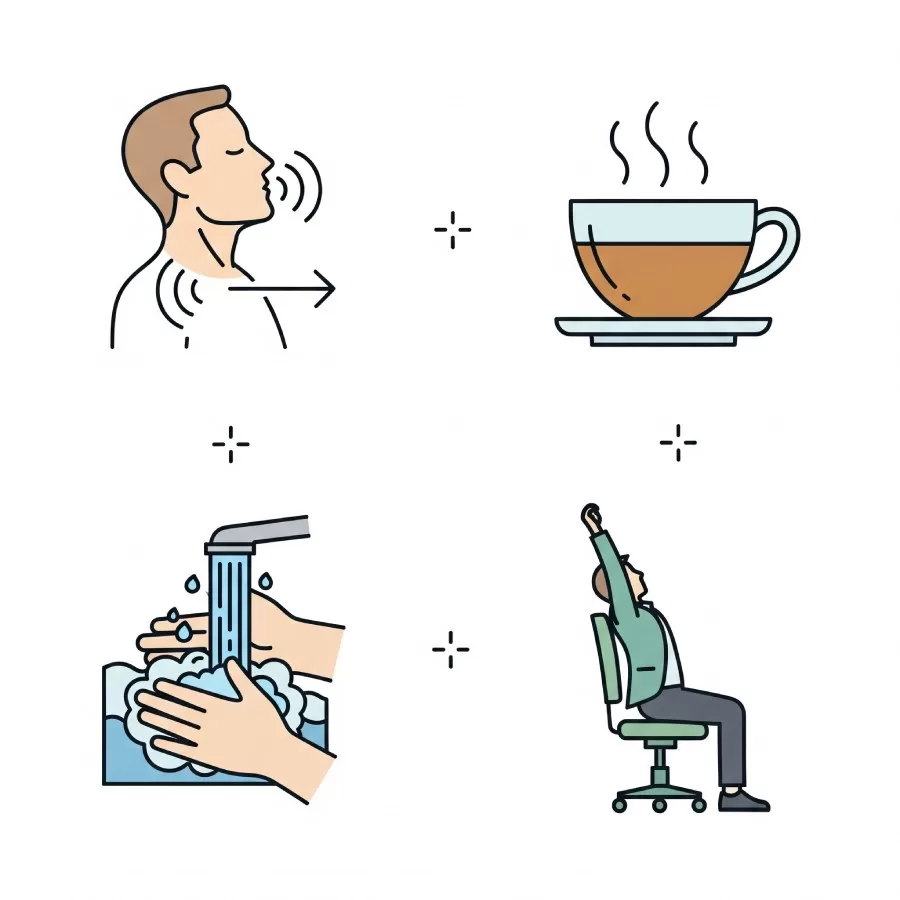
“Snackable” Self-Care: Powerful Practices for 5 Minutes or Less
The most common excuse for not practicing self-care is “I don’t have time.” While longer, dedicated practices are wonderful, you can profoundly shift your physiological and mental state in just a few minutes. Think of these as “self-care snacks” you can sprinkle throughout your day.
Your 5-Minute-or-Less Toolkit:
The Physiological Sigh: Two sharp inhales through the nose, one long exhale through the mouth. The fastest known way to calm your nervous system in real-time.
Step Outside: Spend 60 seconds outside. Feel the sun or the air on your skin. This simple act resets your nervous system.
Mindful Hydration: Make and drink a cup of herbal tea, paying full attention to the warmth, the smell, and the taste.
A Scent Anchor: Put a drop of a calming essential oil like lavender on your wrists and inhale deeply.
Mindful Hand-Washing: Wash your hands with warm water and soap, focusing entirely on the sensory experience.
Desk Stretch: Do a simple neck roll, shoulder shrug, or spinal twist right at your desk.
One-Song Dance Party: Put on your favorite high-energy song and move your body.
How to Build a Sustainable Self-Care Routine (Without Guilt)
Consistency is what turns small actions into transformative habits. But the all-or-nothing mindset (“I missed my meditation today, so I’ve failed”) is the enemy of consistency. The goal is to create a gentle, resilient practice.
Start Laughably Small: Revisit the “One Small Thing” approach. Your goal is not to be perfect, but to build a habit. Can you meditate for just one minute? Can you stretch for just two minutes? Make the barrier to entry so low that you can’t say no.
Habit Stacking: This concept from James Clear’s “Atomic Habits” is game-changing. Link your new desired self-care habit to an existing, automatic habit.
“After I brush my teeth, I will write down one thing I’m grateful for.”
“After I pour my morning coffee, I will drink a full glass of water.”
“When I close my laptop for the day, I will take three deep breaths.”
Never Miss Twice: Life happens. You will miss a day. The key to a sustainable practice is to let go of the guilt and get right back on track. The rule is simple: you can miss one day, but never miss two days in a row. This prevents one slip-up from derailing your entire progress.
Overcoming Common Barriers to Self-Care (Time, Money, and Guilt)
These three barriers are the most common reasons we neglect our own needs. Here’s how to dismantle them with a shift in perspective.
The Barrier: “I don’t have time.”
The Reframe: Self-care is not a cost of time; it is an investment in your energy and focus. Spending 10 minutes meditating can give you back an hour of productive, focused work.
The Solution: Use the “Snackable” self-care list. You have 5 minutes. Everyone has 5 minutes. Start there.
The Barrier: “I can’t afford it.”
The Reframe: Self-care has been commercialized, but its most powerful forms are free. You do not need to buy anything to care for yourself.
The Solution: Focus on the free fundamentals:
Breathing exercises (free).
Getting enough sleep (free).
Going for a walk (free).
Journaling with a pen and paper (nearly free).
Saying “no” (free).
Drinking water (nearly free).
The Barrier: “It feels selfish.”
The Reframe: This is the most profound barrier to overcome. Self-care is not selfish; it is an act of self-preservation that allows you to show up as your best self for others.
The Solution: Use the classic airplane analogy. You must put on your own oxygen mask first before you can help anyone else. If you are depleted, exhausted, and burnt out, you have nothing left to give to your family, your work, or your community. Filling your own cup allows you to give to others from your overflow, not from your reserves.
My Recommended Tools for Your Self-Care Journey
Building a self-care practice is about finding the right tools that make it easier to show up for yourself consistently. Here are a few trusted resources I recommend.
For Mental Self-Care: The Calm app. It’s a fantastic resource for guided meditations, sleep stories, and calming music to support your mental and emotional well-being.
For Physical Self-Care Foundation: Nourishing your gut is a primary act of physical self-care. To support this foundation, I often recommend this all-in-one probiotic and prebiotic blend. It’s a simple way to ensure your body’s core systems are getting the support they need to thrive.
For Emotional Self-Care: The book “Self-Compassion: The Proven Power of Being Kind to Yourself” by Dr. Kristin Neff is an essential read for anyone looking to quiet their inner critic.
By making your self-care practical, accessible, and resilient to life’s challenges, you transform it from a nice idea into a non-negotiable part of your life.
Conclusion: Self-Care as a Radical Act of Self-Respect
We began this journey by challenging a simple idea. We questioned whether self-care was merely the domain of bubble baths and occasional treats. Throughout the seven dimensions of our being—from the physical to the practical, the mental to the emotional—we have discovered a more profound truth.
True self-care is not an escape from our lives. It is the courageous and continuous practice of building a life that feels good to live in, from the inside out.
It is the discipline of tending to your body with nourishing food, restorative sleep, and joyful movement. It is the art of creating mental clarity in a world of noise by decluttering your mind and setting digital boundaries. It is the emotional wisdom to befriend your feelings, set boundaries with grace, and offer yourself compassion when you stumble. It is the deep human work of nurturing your connections, seeking your purpose, and building a life that is not just successful on the outside, but is also deeply fulfilling on the inside.
This is not selfish. It is not an indulgence. It is a radical act of self-respect. It is the declaration that you are worthy of your own time, your own energy, and your own care.
You do not need to overhaul your entire life tomorrow. The journey of a thousand miles begins with a single, gentle step. Choose your “one small thing.” Drink that glass of water. Take those three deep breaths. Say that kind “no.”
Welcome to the practice of caring for your whole self. Your journey begins now.
A Gentle Reminder: Your health journey is beautifully unique. While we are passionate about providing supportive and educational content, please remember that the information in this article is for informational purposes only and is not a substitute for professional medical advice. Always consult your doctor before making significant changes to your diet or lifestyle.