The Gut-Brain Axis: How to Eat Your Way to a Better Mood
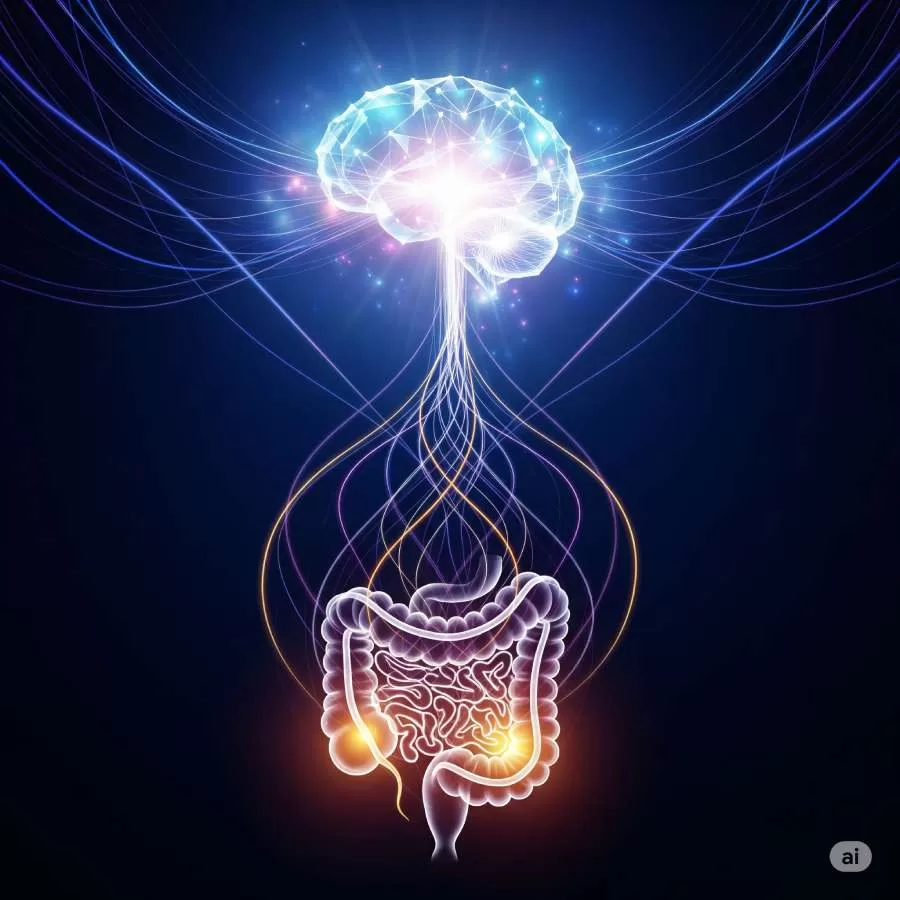
Have you ever felt “butterflies in your stomach” when you were nervous? Or felt irritable and foggy for no apparent reason? We often treat our minds and our bodies as separate entities, but what if the key to a calmer, clearer mind isn’t in your head at all? What if it’s a few feet lower—in your gut?
Welcome to the fascinating world of the gut-brain axis, one of the most exciting frontiers in health and wellness. Your gut is now often referred to by scientists as our “second brain,” and for good reason. It is connected to your primary brain by a constant, two-way communication superhighway.
In this guide, we’ll break down the science of this incredible connection in simple, understandable terms. You’ll learn how your gut health directly influences how you think and feel, and most importantly, you’ll discover practical, food-based strategies to nourish this axis for better mental well-being.
The Two-Way Superhighway: How Your Gut and Brain Talk
This isn’t just a vague feeling; it’s a complex biological system. Your gut and brain communicate through several key pathways.
1. The Vagus Nerve: The Direct Phone Line
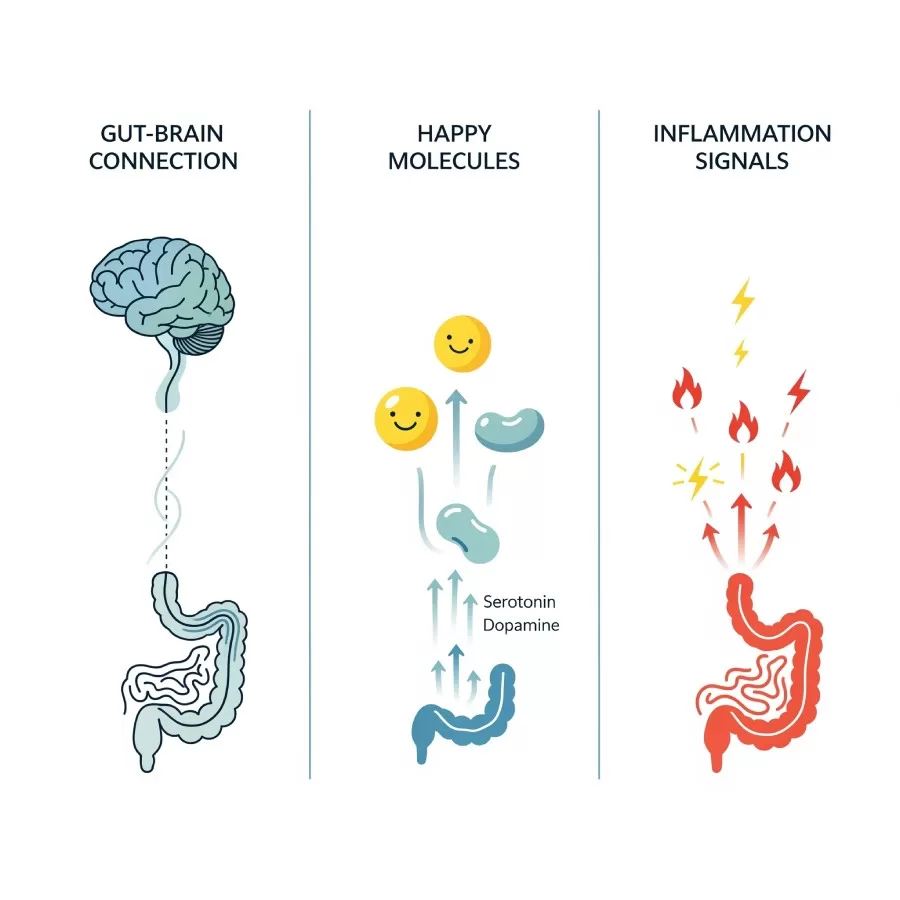
The primary physical connection is the vagus nerve, a massive nerve that runs from your brainstem all the way down to your colon. Think of it as a fiber-optic cable constantly sending messages in both directions. Stress signals from the brain can trigger digestive upset, and signals of inflammation or imbalance from the gut can trigger feelings of anxiety or low mood in the brain.
2. Neurotransmitters: Your Gut’s “Happy Chemicals”
This may be shocking, but an estimated 90% of your body’s serotonin—a primary neurotransmitter responsible for feelings of well-being and happiness—is produced in your gut. The trillions of beneficial bacteria in your gut microbiome play a crucial role in synthesizing serotonin and other mood-regulating chemicals like dopamine and GABA. An unhealthy gut simply can’t produce the raw materials for a happy brain.
3. The Immune System and Inflammation
An unhealthy gut lining (often called “leaky gut”) can allow undigested food particles and toxins to enter the bloodstream, triggering an inflammatory response from your immune system. These inflammatory signals don’t just stay in the gut; they are systemic. When they reach the brain, they can cause what is known as “neuroinflammation,” which is strongly linked to brain fog, fatigue, and depressive symptoms.
Is Your Gut-Brain Axis Out of Sync? Common Signs
Because the communication is a two-way street, an imbalance can manifest in both physical and mental symptoms. Seeing persistent issues on both sides of this list is a strong clue that your gut-brain axis needs support.
Digestive Symptoms:
Frequent bloating, gas, or cramping
Constipation or diarrhea
Food sensitivities or intolerances
Heartburn or acid reflux
Mental & Emotional Symptoms:
Anxiety or persistent feelings of unease
Brain fog or difficulty concentrating
Low mood or depressive feelings
Irritability and mood swings
5 Food-Based Strategies to Nourish Your Gut-Brain Axis
The most powerful way to improve this connection is by nourishing the ecosystem within your gut. Here are five foundational strategies.
1. Feed Your Microbiome with Prebiotic Fiber
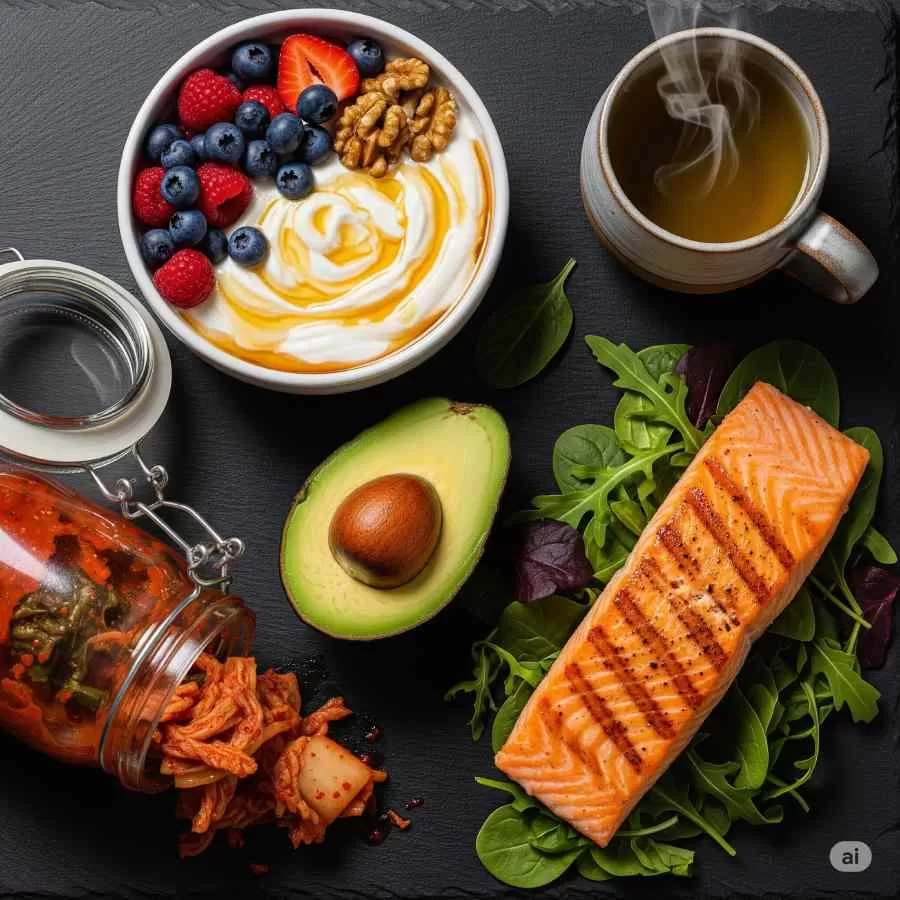
Prebiotics are the “fertilizer” for your good gut bacteria. They are specific types of fiber that your beneficial microbes love to eat. Include plenty of garlic, onions, asparagus, leeks, bananas, and oats in your diet.
2. Populate Your Gut with Probiotic-Rich Foods
Probiotics are the “good guy” bacteria themselves. You can introduce them by eating fermented foods, which are rich in diverse, live cultures. Excellent sources include kefir, plain yogurt (with live cultures), sauerkraut, kimchi, miso, and kombucha.
3. Boost Your Omega-3 Fatty Acids
Omega-3s are powerful anti-inflammatory fats that are essential for the health of your brain cells. A diet rich in Omega-3s helps combat the neuroinflammation that can be caused by an unhealthy gut. Find them in fatty fish (salmon, mackerel, sardines), walnuts, flaxseeds, and chia seeds.
4. Eat a Rainbow of Polyphenols
Polyphenols are antioxidant compounds found in plants that give them their vibrant colors. They act as prebiotics and have potent anti-inflammatory effects. Great sources include berries, dark chocolate (in moderation), green tea, and extra virgin olive oil.
5. Minimize Gut-Wreckers
Just as important as what you add is what you limit. A diet high in processed foods, excessive sugar, and industrial seed oils can promote the growth of harmful bacteria and increase inflammation, directly harming your gut lining and, by extension, your brain.
A Note on Supplemental Support:
Building a healthy gut through a whole-foods diet is the foundational goal. However, for those looking to provide consistent, high-potency support to their microbiome, a high-quality supplement can be a powerful ally. It can help accelerate the process of rebalancing your gut ecosystem. For this purpose, a professional-grade synbiotic formula (which includes both probiotics + prebiotics) is the tool I recommend for building a strong foundation.
The Gut is Just One Pillar of a Holistic Life

Nourishing your gut-brain axis is a life-changing step towards better mental health. But it’s part of a larger, interconnected system. To achieve true, vibrant well-being, this foundation must be supported by mindful movement, restorative sleep, and a life of purpose.
Think With Your Gut
The old sayings “trust your gut” and “you are what you eat” are more profoundly true than we ever imagined. Your gut and your brain are in a constant, intimate conversation, and the food on your plate is a primary director of that dialogue.
By choosing to consciously nourish your gut, you are actively choosing to nourish your mind. This is not just nutrition; it is a radical and empowering act of self-care for your entire being.
Which of these gut-friendly foods are you excited to add to your plate this week? Let us know in the comments!
A Gentle Reminder: Your health journey is beautifully unique. While we are passionate about providing supportive and educational content, please remember that the information in this article is for informational purposes only and is not a substitute for professional medical advice. Always consult your doctor before making significant changes to your diet or lifestyle.